Our story
Are you puzzled why, when in company with certain people, tensions rise, disagreements occur, or perhaps you feel anxious, frustrated, hurt, annoyed, angry or just sad? Maybe that’s every time you meet that person.
I have many memories of these drama situations from the first sixty years of my life, and having finally gained some insight into them, I have realised many other people can benefit from this shared knowledge. I wish I knew about this earlier! I could have saved myself a lot of unhappiness.
In 2017 after a quarrel with a work colleague, my coach, Ruth McCance, explained the Drama Triangle (Dr Stephen Karpman MD (1968)) concept to me. I recognised patterns I learned in childhood from my beautiful but flawed family, and which I unwittingly carried into adulthood, partner relationships, work, social situations and parenting. I am not unusual. We all develop beliefs about the world and develop healthy, quirky and unhealthy behaviours in childhood. If we are lucky, we unlearn the bad ones earlier in life. If not, we can go on making life difficult for ourselves, over and over.
But it’s not enough to be advised by well-meaning others “don’t be a victim” or a “bully” or to “mind your own business” if you don’t know what else to “be”. Ruth taught me about another concept called the Winner’s Triangle (Acey Choy(1990)), and this is when the penny dropped for me.
As I took these lessons on board, and spoke to others about them, I realised many people would appreciate the opportunity to learn about them too. The idea of creating a learning tool was born, and here we are!
Bridget Wardlaw
MB BPM
My profession at retirement was in business performance improvement, specialising in process analysis and design, and working to introduce change with people who were often afraid, annoyed or antagonistic. My career has spanned archaeology, mainframe computers, costume historian and maker, Local Government admin and quality management, IT Project management, IT Service Management and process management. The human condition was awkward through all of these fields.
In voluntary roles I have been an activist for aboriginal rights, women’s equality, and the environment. I was State President of the ASU in South Australia in the 1990’s and President of a residents’ association engaged in a long campaign to save Adelaide’s beaches from development and perpetual maintenance to repair the damage caused. We failed, sadly, but during this campaign I first met Ruth McCance who was providing a charter for our peaceful demonstrations.

Peter Hill
BSc; BND; Dip.PSD
Peter has worked for many years as a dietician and counsellor, and also as a winemaker in the Adelaide Hills.
He is developing a psychotherapy model that focuses on emotional eating. It aims to facilitate people to have a healthier relationship with themselves and food.
Peter is a senior food service dietician to various institutions in South Australia and the UK and a performance and mindset coach for optimising self potential.
Peter and Ruth McCance explored the concepts of the Drama and Winners’ Triangles together with John Warren.
This experience has been critical to the development of Drama To Calmer.
Ruth McCance
In gratitude for the life of Ruth McCance
Ruth was kind, loving and wise woman who was a leadership coach, business adviser, cyclist and adventurer.
Ruth said that corporations lacked love, which caused much of the pain experienced in the workplace. This also holds true for couples, groups of friends, organisations, nations and families. Behaviours learned in families by children are passed on to many generations and into every entity those children grow up to work in and run, spreading and perpetuating disfunction.
Her leadership was integral to the formation of The Grove Is Open Co-operative, an organisation seeking to find alternatives for members to corporate life while still making a living. After her death, I worked with some members of The Grove to develop an early concept of this tool.
Ruth was a trained counsellor who guided many to discover their own strengths and to back themselves in their initiatives. She is still missed by many.
Ruth took up mountaineering following a childhood ambition but gave it up as too risky, only to reverse her decision as she approached 50. Despite excellent preparation and risk management an avalanche took her life in 2017.
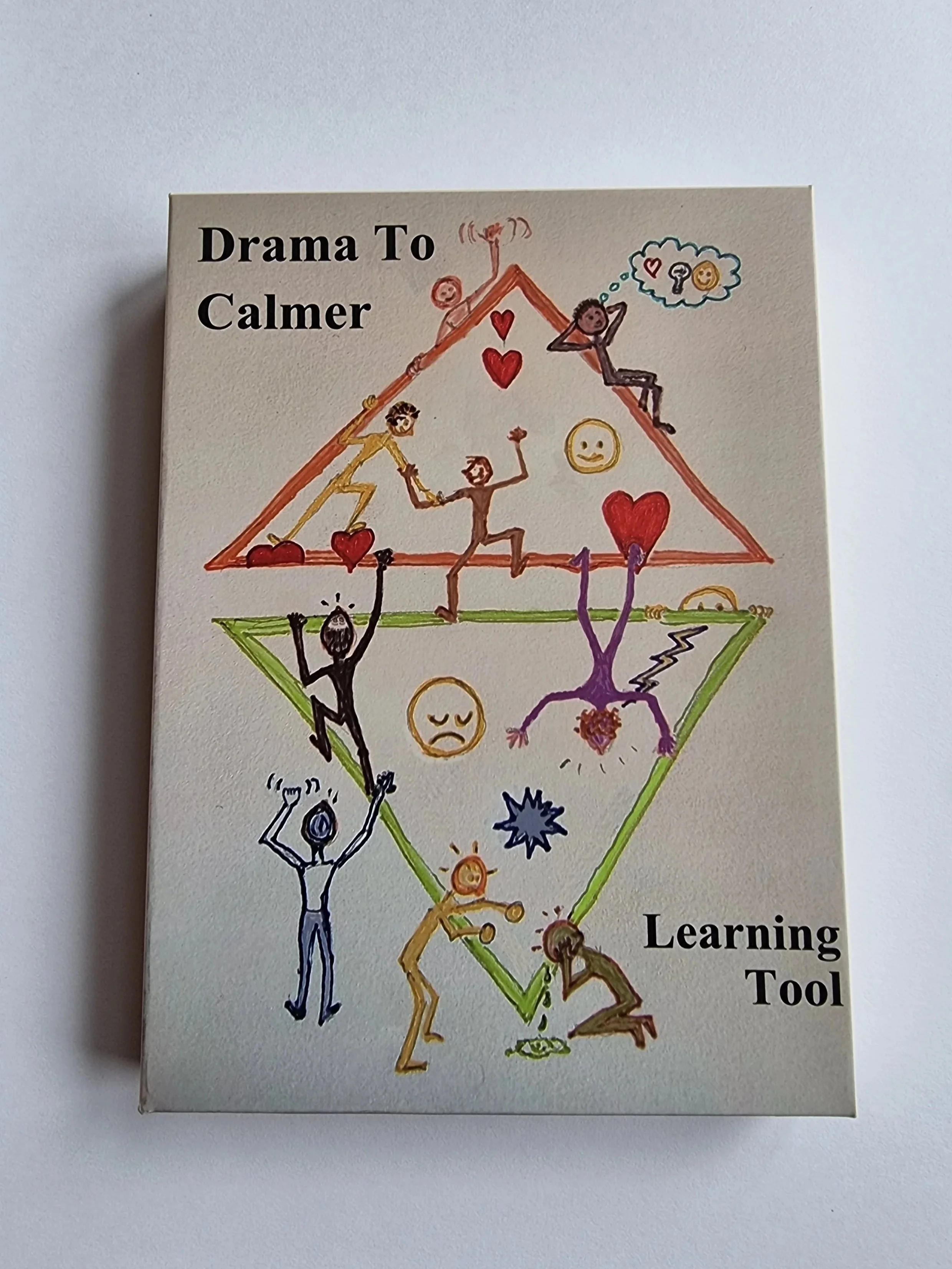
Do you want less drama in your life?
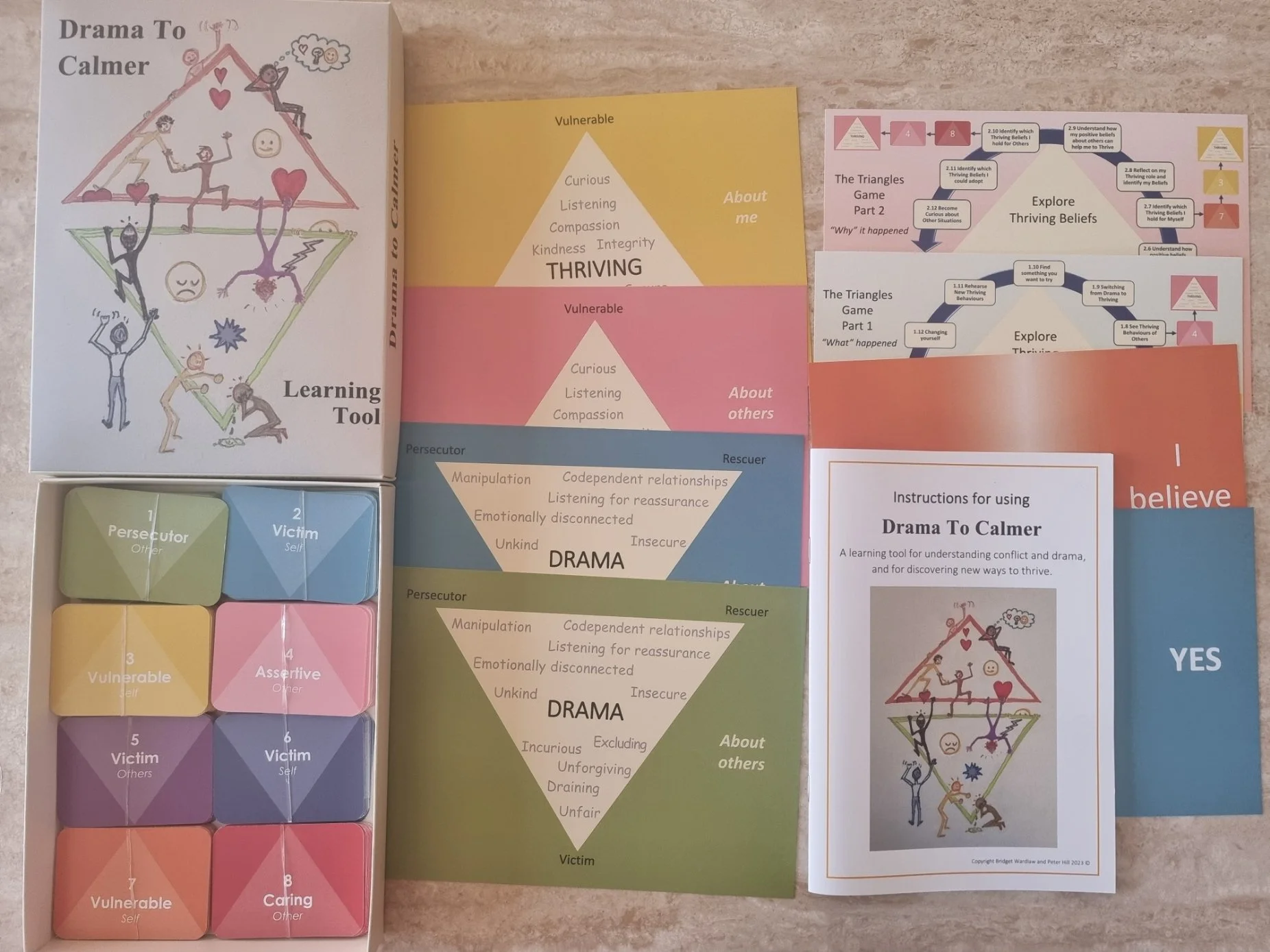
Drama To Calmer is a self-learning tool. It allows you to reveal and explore yours and others' behaviours, beliefs and patterns that keep you stuck in a Drama Triangle, and how to move to the Thriving Triangle, where you can experience a calmer way of life.
This tool assists you to recognise that you are “playing” in a Drama Triangle, how that affects you, and to see what alternatives there are for you. It teaches you about Thriving Triangle behaviours and how to move into the Thriving Triangle and how to stay there.